
Low back pain is one of the most common reasons people seek physiotherapy, but it is also one of the most misunderstood. Many people expect back pain to have one simple cause: a “slipped disc,” a weak core, poor posture, arthritis, or a muscle strain. Sometimes one of these factors is involved, but low back pain is often more complex than that.
For many people, low back pain comes and goes. It may flare after gardening, lifting, sitting too long, sleeping awkwardly, driving, working at a desk, or doing something as simple as bending forward to pick something up. The pain can be intense and alarming, even if it settles again after a few days. This pattern can be frustrating because it may feel unpredictable: you might feel strong and mobile one week, then suddenly feel stiff, guarded, and unable to move comfortably the next.
At our clinic, we understand that recurring low back pain is rarely just about one muscle or one joint. It can involve the spine, hips, pelvis, nerves, muscles, tendons, strength, mobility, workload, stress, sleep, previous injuries, and how sensitive the nervous system has become over time. Pain does not always mean serious damage, but it does mean your body is asking for attention.
Our goal is to help you understand what may be contributing to your pain, reduce symptoms during flare-ups, and build a plan to make your back more resilient over time. Our therapists use many different techniques to help help calm down both acutely flared up backs and make meaningful change for those struggling with long-standing low back pain. Read on to learn more about 3 common treatment techniques we frequently use to treat low back pain!
IMS / Dry Needling for the Glutes and Lumbar Paraspinals (the big muscles in your low back)
When low back pain flares up, the muscles around the spine and hips often become tight, protective, and sensitive. This is sometimes called muscle guarding. It is your body’s way of trying to protect the area, but it can also make pain worse. When the muscles stay tense for too long, movement can feel restricted, bending can feel threatening, and even simple activities like standing from a chair or rolling over in bed can become painful. Often, this happens because of spending many hours sitting in a chair while working, or having some muscle tightness and weakness from a previous injury or episode of back pain.
Two areas we commonly assess are the lumbar paraspinals and the glute muscles. The lumbar paraspinals are the muscles that run along either side of the lower spine. They help support posture, control movement, and stabilize the back. The glute muscles, located around the buttocks and hips, play a major role in walking, climbing stairs, standing, lifting, and controlling the pelvis.
When the glutes are not working well, or when they become tight and irritated, the low back may take on more stress. Similarly, when the lumbar paraspinals are overactive or sensitive, they can contribute to stiffness, aching, spasms, or that feeling that the back is “locked up.” Both the gluteal and the lumbar paraspinals can refer pain to different parts of the low back, hip and leg when they are irritated (see below; the cross is the irritated muscle, and the red is the pain referral you feel).
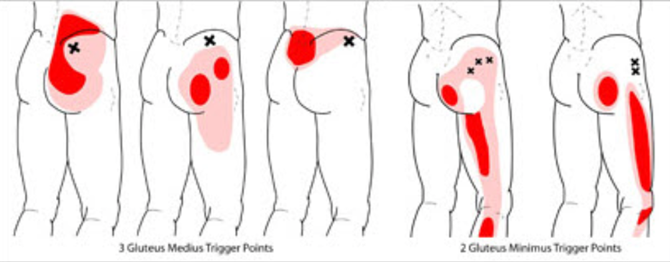
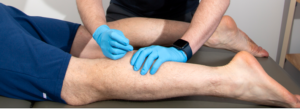
IMS, also known as dry needling, uses very fine needles to target sensitive, tight, or overactive muscle bands. Very often, needling the glutes and lumbar paraspinals can help reduce muscle tension, decrease pain sensitivity, and improve movement. This can be especially helpful during a painful flare-up when the body feels guarded and exercise feels difficult.
Dry needling is not about simply “releasing a knot.” Low back pain is more complex than that. Instead, IMS can help calm down irritated muscles, remove chemicals from the area which cause pain and inflammation, and relax the nervous system so that you can move more comfortably. When pain decreases, it often becomes easier to walk, bend, strengthen, and return to normal activities.
IMS is usually most effective when it is part of a broader treatment plan. It may help settle symptoms, but long-term improvement usually also requires strengthening, movement retraining, and better load management.
Shockwave Therapy
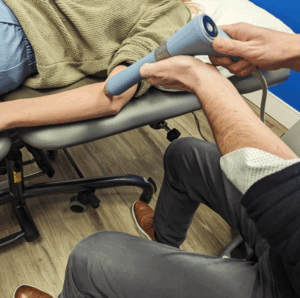
Shockwave therapy is another treatment option that may help certain people with persistent or recurring low back pain. It uses acoustic energy to stimulate tissues that are irritated, sensitive, or slow to recover. While shockwave is commonly known for treating tendon conditions, it can also be useful when low back pain is connected to ongoing soft tissue sensitivity around the hips, pelvis, glutes, or lower back. Generally, we use shockwave therapy when the condition has been present for 3 months or more.
Low back pain often involves more than the spine itself. The surrounding tissues can become irritated from repeated strain, reduced strength, poor recovery, or changes in how you move. For example, discomfort around the gluteal tendons, sacroiliac region, hip muscles, or lower back soft tissues can all contribute to pain that feels like it is coming from the back.
Shockwave therapy may be considered when symptoms have been lingering for weeks or months, or when the same area keeps flaring up despite rest, stretching, massage, or medication. It is non-invasive, typically quick to apply, and does not require downtime. Some people feel temporary soreness afterward, similar to how a muscle may feel after exercise, but this usually settles.
The purpose of shockwave is not to “blast away” pain. Instead, it is used to stimulate a healing response, improve tissue tolerance, and reduce sensitivity in areas that are not settling properly. For people with recurring low back pain, this can sometimes help create a window where movement and strengthening become easier.
As with any treatment, shockwave is not right for everyone. Your physiotherapist will assess your symptoms, history, and goals to decide whether it is appropriate. If shockwave is recommended, it will usually be combined with exercise therapy and education so that the underlying contributors to your pain are also addressed.
Exercise Therapy
Exercise therapy is one of the most important parts of managing low back pain, especially when symptoms come and go. Many people worry that exercise will make their back worse, and that fear is understandable when pain can be sharp or intense. However, the right exercises, introduced at the right time and progressed carefully, can help reduce pain, improve confidence, and make flare-ups less frequent.
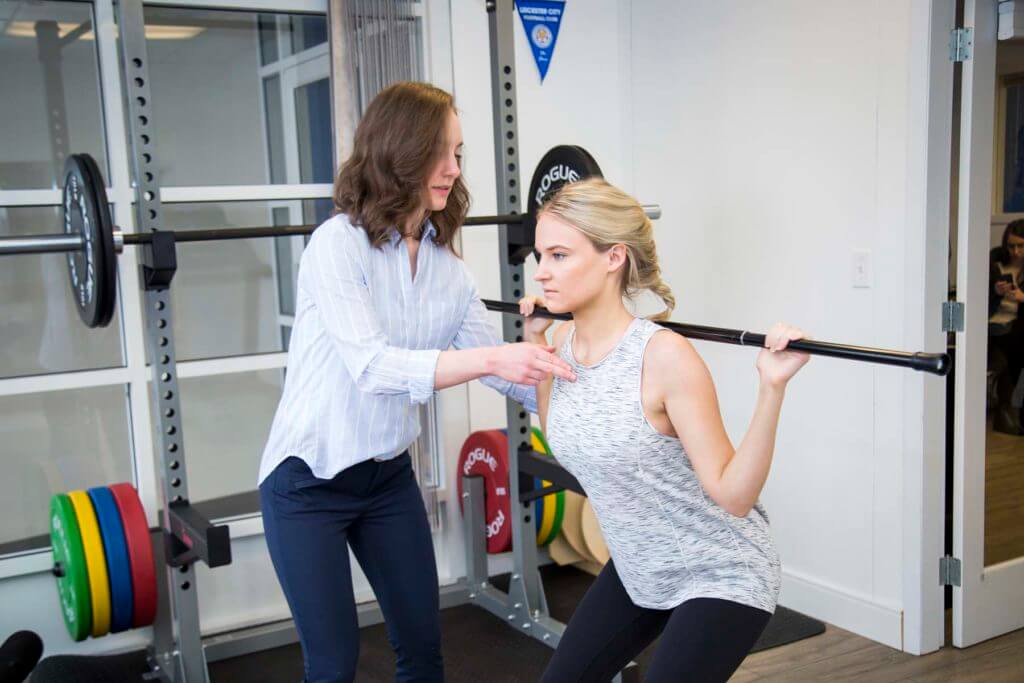
Because low back pain is complex, exercise therapy should not be a generic list of stretches or core exercises. Some people need more hip strength. Others need better spinal mobility, improved balance, stronger glutes, better lifting tolerance, or gradual exposure to movements they have been avoiding. Some people need to start with very gentle movements during a flare-up, while others are ready for heavier strengthening.
A good exercise plan considers your pain pattern, lifestyle, work demands, fitness level, and goals. For someone who sits for long periods, we may focus on movement breaks, hip mobility, and trunk endurance. For someone who lifts at work, we may focus on strength, technique, and building tolerance to bending and loading. For someone who has stopped exercising because of fear, we may start with small, achievable steps to rebuild trust in their body.
Exercise also helps change how the nervous system responds to movement. When pain has been recurring for a long time, the body can become more protective. Movements that are safe may still feel painful because the system is on high alert. Gradual exercise helps teach the body that movement is safe again.
At our clinic, we help you find the right starting point. The goal is not to push through severe pain or overwhelm you with a complicated routine. The goal is to build consistency, confidence, and capacity. Over time, exercise therapy can help you move better, feel stronger, recover faster from flare-ups, and return to the activities you enjoy.
The Next Steps
Low back pain may be complex, but it is also very treatable. With the right assessment, a clear plan, and a combination of targeted treatments and active rehabilitation, many people can reduce pain and feel more confident in their back again.
Are you ready to start treatment for your low back pain? All of our physiotherapists use IMS/ dry needling, shockwave therapy and exercise therapy in their treatments, and you can book your appointment with them by clicking here!