
3 Common Conditions We Treat With Shockwave Therapy
Shockwave Therapy has become a popular treatment option in physiotherapy clinics for stubborn aches and pains that do not seem to settle with rest, stretching, massage, or time alone.
At Penticton Physiotherapy & IMS Clinic, our therapists use Shockwave Therapy as part of a larger treatment plan for long-standing tendon, muscle, and soft tissue problems that have typically been present for at least 3 months.
This is important. Shockwave Therapy is not usually our first step for a brand-new injury. Many new aches and pains settle well with good advice, activity modification, exercise, hands-on treatment, and time. We usually consider Shockwave Therapy when a problem has become more persistent and is not improving as expected with standard treatment.
In this blog, we’ll explain what Shockwave Therapy is, how it works, and three common conditions we often use it for in the clinic.
What is Shockwave Therapy?
Despite the name, Shockwave Therapy is not an electric shock.
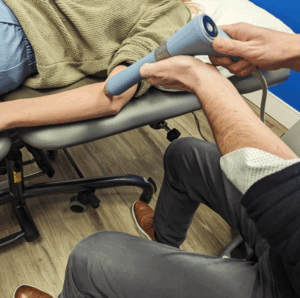
Shockwave Therapy uses acoustic sound waves that are applied to the painful or injured area through a handheld treatment head. These sound waves travel into the tissues and help stimulate a healing response in areas that may be slow to recover.
Many tendon problems become stubborn because tendons naturally have a poorer blood supply than muscles. This means they can take longer to heal, especially when they have been irritated for weeks or months.
Shockwave Therapy may help by increasing local blood flow, stimulating tissue repair, and encouraging the body to “restart” the healing process in an area that has become chronically irritated.
In our clinic, Shockwave Therapy is usually combined with other important parts of treatment, such as specific strengthening exercises, mobility work, activity modification, hands-on treatment, IMS/Dry Needling where appropriate, and education about how to gradually return to the activities you enjoy.
When do we use Shockwave Therapy?
At Penticton Physiotherapy & IMS Clinic, we generally only use Shockwave Therapy for problems that have been present for at least 3 months.
This is because Shockwave Therapy is typically most appropriate for more persistent tendon, muscle, or soft tissue problems rather than fresh injuries. If you hurt yourself last week, your physiotherapist will usually start with a thorough assessment, advice, exercise, and treatment to help calm the area down and get you moving properly again.
If the problem has been hanging around for several months and is not improving as expected, Shockwave Therapy may be one option to help stimulate the healing process.
The most important question is not simply, “Can we use Shockwave Therapy?” but rather, “Is Shockwave Therapy the right tool for your specific problem?”
1. Plantar Fasciitis / Plantar Heel Pain
One of the most common conditions we use Shockwave Therapy for is plantar fasciitis, sometimes called plantar fasciopathy or plantar heel pain.
This condition usually causes pain under the heel or along the bottom of the foot. It is often worse with the first few steps in the morning, after sitting for a while, or after longer walks, runs, or standing periods.
People often describe it as:
- A sharp pain under the heel
- A bruised feeling on the bottom of the foot
- Pain when first getting out of bed
- Pain that warms up slightly, then returns later in the day
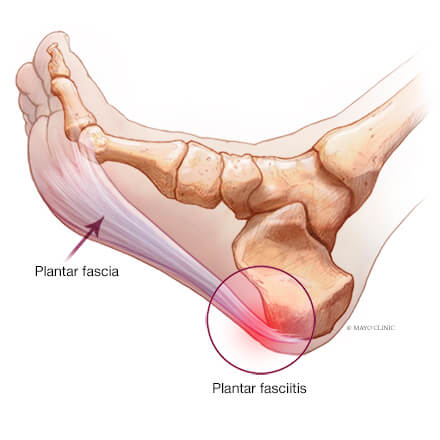
Plantar fasciitis can be frustrating because it often lingers. Many people try changing shoes, stretching, rolling the foot on a ball, or resting, but the pain keeps coming back when they increase activity again.
Shockwave Therapy can be helpful for stubborn heel pain because it targets the irritated tissues directly and may help stimulate the healing process in the plantar fascia and surrounding soft tissues.
However, we rarely rely on Shockwave Therapy alone. Your physiotherapist will also look at factors such as calf strength, ankle mobility, walking or running load, footwear, and how much stress is being placed through the foot day to day. The goal is not just to reduce pain temporarily, but to help the area tolerate load better over time.
2. Achilles Tendinopathy
Achilles tendinopathy is another common condition we treat with Shockwave Therapy.
The Achilles tendon is the large tendon at the back of your ankle that connects your calf muscles to your heel bone. It works hard during walking, running, hiking, jumping, and climbing stairs.
Achilles tendinopathy often causes pain or stiffness at the back of the heel or slightly higher up in the tendon. It may feel stiff first thing in the morning, sore when starting activity, or painful after running, walking hills, or playing sports.
Common signs include:
- Morning stiffness in the Achilles tendon
- Pain when walking uphill or climbing stairs
- Tenderness when squeezing the tendon
- Pain during or after running
- A thickened or swollen feeling in the tendon
Achilles pain can be tricky because complete rest often does not fix the problem. In many cases, the tendon needs the right amount of load to get stronger again — not too much, not too little.
This is where physiotherapy becomes very important.
Shockwave Therapy may help reduce pain and stimulate healing in the irritated tendon, but the long-term solution usually involves a progressive strengthening program for the calf and Achilles. Your physiotherapist will guide you through the right exercises and help you understand how to manage walking, running, sport, and hill activity while the tendon recovers.
For active people in Penticton who enjoy running, hiking, tennis, pickleball, golf, skiing, or cycling, Achilles pain can be a major nuisance. Shockwave Therapy can be one useful tool to help get the tendon moving in the right direction again.
3. Tennis Elbow / Golfer’s Elbow
Shockwave Therapy can also be useful for stubborn elbow pain, commonly known as tennis elbow or golfer’s elbow.
Tennis elbow usually causes pain on the outside of the elbow and is often related to irritation of the wrist extensor tendons. Golfer’s elbow usually causes pain on the inside of the elbow and involves the wrist flexor tendons.
Despite the names, you do not need to play tennis or golf to develop these conditions. We often see elbow tendon pain in people who do repetitive gripping, lifting, typing, gardening, home projects, gym training, racket sports, or manual work.
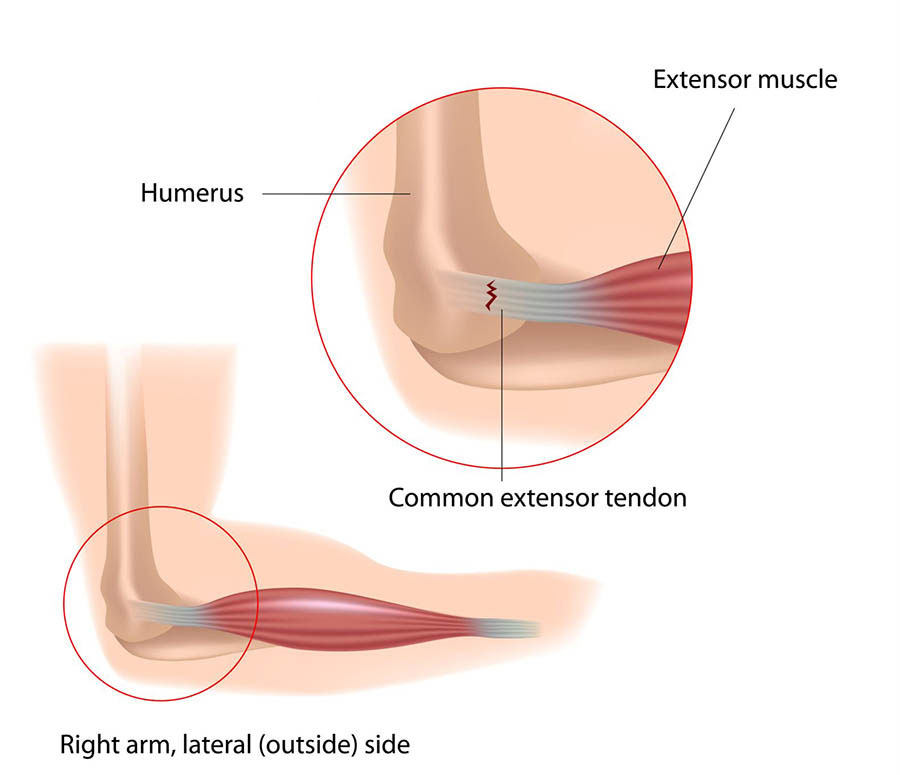
Symptoms may include:
- Pain gripping objects
- Pain lifting a kettle, pan, bag, or tool
- Pain shaking hands
- Pain with racket sports or golf
- Tenderness around the inside or outside of the elbow
- Aching into the forearm
Elbow tendon pain can be frustrating because it affects simple daily activities. Even small tasks like opening a jar, lifting groceries, or using a screwdriver can become painful.
Shockwave Therapy may help by stimulating the irritated tendon and reducing sensitivity in the area. As with other tendon problems, we usually combine this with specific strengthening exercises for the forearm, shoulder, and upper limb, as well as advice about modifying the activities that are keeping the tendon irritated.
The goal is to help the tendon become stronger and more tolerant, so you can get back to work, sport, and daily life with less pain.
Other conditions we may treat with Shockwave Therapy
Although plantar fasciitis, Achilles tendinopathy, and tennis/golfer’s elbow are three of the most common conditions we use Shockwave Therapy for, they are not the only ones.
When symptoms have been present for 3 months or longer, our physiotherapists may also consider Shockwave Therapy for other persistent conditions, including:
- Patellar tendinopathy / jumper’s knee
- Rotator cuff tendinopathy
- Calcific shoulder tendinopathy
- Gluteal tendinopathy / outer hip pain
- Low back pain
- Chronic muscular pain or myofascial pain
- Persistent calf, hamstring, quad, or shoulder muscle pain
- Shin splints / medial tibial stress syndrome
- Other stubborn tendon or soft tissue problems that have not settled with standard care
This does not mean Shockwave Therapy is automatically the right treatment for every case. Your physiotherapist will always assess the area first, look at your symptoms and goals, and decide whether Shockwave Therapy is appropriate for you.
What does Shockwave Therapy feel like?
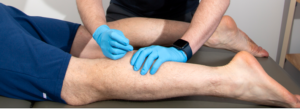
Shockwave Therapy can feel a bit uncomfortable while it is being applied, especially over a tender tendon, muscle, or painful area. Most people tolerate it well, and your therapist will adjust the intensity to keep it manageable.
The treatment itself is usually quite quick. Many patients receive Shockwave Therapy as part of a regular physiotherapy appointment, alongside assessment, exercise, education, and other treatment techniques.
Some people feel improvement quickly, while others notice gradual change over several sessions. It is also normal to feel some temporary soreness, redness, or tenderness in the treated area afterward.
Is Shockwave Therapy right for everyone?
No. Shockwave Therapy is not suitable for every person or every injury.
Your physiotherapist will assess your symptoms, health history, and goals before recommending it. There are some situations where Shockwave Therapy may not be appropriate, such as during pregnancy, with certain medical conditions, after recent corticosteroid injections, or in people with certain clotting or circulation issues.
That is why we always start with an assessment first. We want to understand what is causing your pain, how long it has been present, what has already been tried, and what you want to get back to doing.
The bottom line
Shockwave Therapy can be a helpful treatment option for stubborn tendon, muscle, and soft tissue problems, especially when pain has been present for 3 months or longer and is not improving as expected.
When used well, Shockwave Therapy is not a stand-alone treatment. It works best when combined with a proper diagnosis, a clear exercise plan, load management, and advice specific to your body and your goals.
If you have a stubborn heel, Achilles, elbow, shoulder, hip, knee, or muscular pain problem that has been bothering you for 3 months or more, our physiotherapists can assess the area and let you know whether Shockwave Therapy may be a good option for you.
To book an appointment, call Penticton Physiotherapy & IMS Clinic at 250-493-1152 or book online through our website.