
Low back pain is one of the most common reasons people seek physiotherapy. Whether it develops suddenly after lifting something heavy or gradually builds up over weeks or months, back pain can make even simple activities uncomfortable.
Sitting at work, getting out of bed, gardening, exercising, or playing with your children can all become difficult when your back is painful.
The good news? Most episodes of low back pain improve, and physiotherapy can play an important role in recovery and helping you return to the activities you enjoy.
What causes low back pain?
Low back pain can develop for several reasons, including muscle and joint irritation, changes in physical activity, and increased demands on the structures of the spine.
Sometimes it begins after a specific movement, such as bending or lifting. Other times, there is no obvious cause.
Common contributing factors include:
- A sudden increase in physical activity or workload
- Repetitive bending or lifting
- Spending long periods in the same position
- Reduced strength or tolerance for certain activities
- A previous episode of back pain
- Stress, disrupted sleep, or other factors that can influence pain sensitivity
Importantly, low back pain does not always mean something is seriously damaged. Pain can be influenced by several factors, and the intensity of the pain does not necessarily indicate the severity of an injury.
How can physiotherapy help?
1. Understanding the cause of your symptoms
One of the first steps in physiotherapy is a thorough assessment.
Your physiotherapist will ask about your symptoms, medical history, daily activities, and what makes your pain better or worse.
They may also assess your movement, strength, flexibility, and neurological function when appropriate.
The goal is to understand what is contributing to your symptoms, identify any concerns requiring medical investigation, and develop a treatment plan tailored to you.
2. Helping you move with confidence
When your back hurts, it’s natural to avoid movements that seem uncomfortable.
While temporarily modifying painful activities can be helpful, completely avoiding movement or prolonged bed rest is generally not recommended for uncomplicated low back pain.
Your physiotherapist can help you gradually return to comfortable movement through exercises appropriate for your symptoms.
These might include gentle spinal movements, walking, hip mobility exercises, or specific movements that help reduce your symptoms.
The aim is not to force your back through pain, but to gradually restore confidence and movement tolerance.
3. Building strength and resilience
Exercise is one of the most strongly supported treatments for persistent low back pain.
Research supports several different approaches, including:
- Trunk and abdominal strengthening
- Hip and gluteal strengthening
- General resistance training
- Pilates-style exercises
- Aerobic exercise, such as walking or swimming
- Movement control and endurance exercises
There is no single exercise that works best for everyone.
Your physiotherapist can identify appropriate starting exercises and gradually increase their difficulty as your strength and tolerance improve.
Rather than simply making your back more flexible, the goal is to improve its ability to handle everyday demands.
4. Hands-on treatment to help manage symptoms
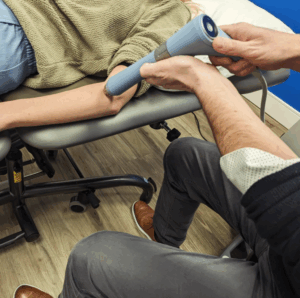
Physiotherapy may also involve hands-on treatments, such as joint mobilization, manipulation, or soft tissue techniques.
These treatments can help reduce pain and improve movement in some people, particularly when symptoms are making exercise or daily activities difficult.
For selected patients, IMS/Dry Needling may also be considered as an additional treatment for short-term symptom relief.
However, hands-on treatments are generally most useful as part of a broader rehabilitation program rather than as the only treatment.
The long-term goal is to help you manage your symptoms independently, not become reliant on regular treatment.
5. Helping prevent recurring episodes
Many people experience more than one episode of low back pain during their lifetime.
Physiotherapy can help identify factors that may be contributing to recurring symptoms and provide practical strategies to manage them.
This may include:
- Gradually increasing exercise or lifting demands
- Building strength and endurance
- Learning how to manage temporary flare-ups
- Varying positions during prolonged desk work
- Developing a sustainable exercise routine
Importantly, there is no single perfect posture or lifting technique that guarantees you won’t experience back pain. Building confidence, strength, and the capacity to perform different movements is often more helpful.
Do you need an X-ray or MRI?
Not necessarily.
For most uncomplicated low back pain, imaging is not required before starting physiotherapy.
Changes seen on an MRI, such as disc degeneration or bulging discs, can also occur in people without pain.
Imaging is more useful when a clinician suspects a serious underlying problem or when the results would change treatment decisions.
Your physiotherapist can help determine whether further medical assessment is appropriate.
New bladder or bowel control problems, numbness around the groin or saddle area, or significant progressive leg weakness require urgent medical assessment.
When should you see a physiotherapist?
You don’t need to wait until your back pain becomes severe or has lasted for months.
Physiotherapy may be helpful if your pain is interfering with work, sleep, exercise, or daily activities, or if you’ve experienced repeated episodes.
At Penticton Physiotherapy & IMS Clinic, our goal is to help you understand your symptoms, build strength, restore movement, and return to doing what you love.
Low back pain can be frustrating, but with the right approach, there is often plenty you can do to help yourself feel and move better.
If you feel ready to resolve your back pain, you can book with one of our physitherapists by clicking HERE!
References
- World Health Organization (2023). WHO guideline for non-surgical management of chronic primary low back pain in adults in primary and community care settings.
https://www.who.int/publications/i/item/9789240081789 - George SZ, et al. (2021). Interventions for the Management of Acute and Chronic Low Back Pain: Revision 2021. Journal of Orthopaedic & Sports Physical Therapy, 51(11), CPG1–CPG60.
https://doi.org/10.2519/jospt.2021.0304 - National Institute for Health and Care Excellence. Low back pain and sciatica in over 16s: assessment and management (NG59).
https://www.nice.org.uk/guidance/ng59/chapter/Recommendations - National Institute for Health and Care Excellence. Suspected neurological conditions: recognition and referral (NG127).
https://www.nice.org.uk/guidance/ng127/chapter/Recommendations-for-adults-aged-over-16